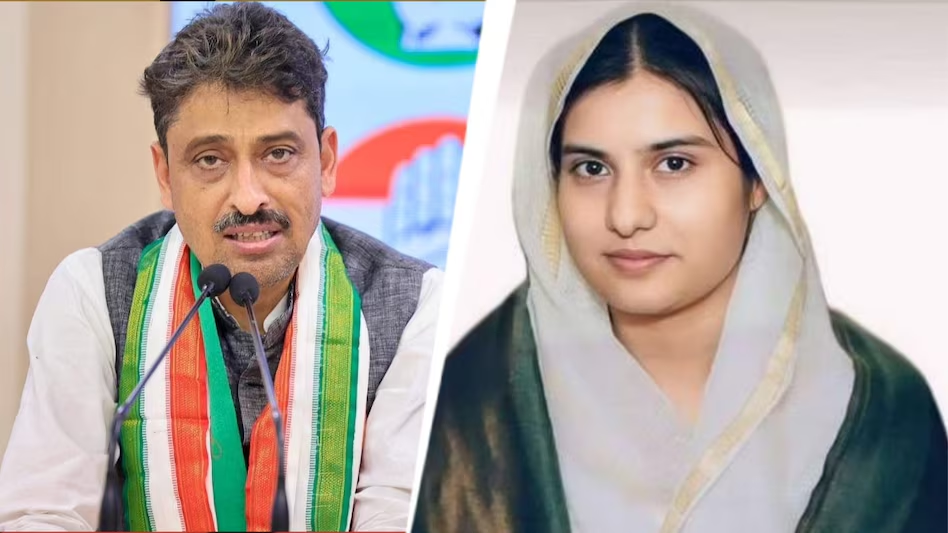
Lucknow: Political discussions over representation and leadership among Muslim voters in western Uttar Pradesh have intensified ahead of the 2027 Assembly elections, with recent differences between Congress MP Imran Masood of Saharanpur and Samajwadi Party MP Iqra Hasan of Kairana drawing attention to the evolving political equations in the region.
The developments have also brought into focus broader questions concerning the respective roles of the Samajwadi Party (SP) and Congress, particularly their organisational presence, regional leadership and possible seat-sharing arrangements ahead of the Assembly polls.

Both parties contested the 2024 Lok Sabha elections in Uttar Pradesh as allies. With preparations for the 2027 Assembly elections underway, discussions over organisational expansion, constituency-level strength and the distribution of seats could become significant aspects of their political engagement.
Imran Masood has remained an active political figure in western Uttar Pradesh and emerged as a prominent Congress face in the region after winning the Saharanpur Lok Sabha seat. His political interventions have included emphasis on the Congress’s role and representation within the opposition alliance.
Iqra Hasan, who won the Kairana Lok Sabha seat, has also emerged as a prominent SP leader in western Uttar Pradesh. Her political activities have added another dimension to discussions about regional representation and the SP’s organisational presence.
The differences expressed by the two leaders are being viewed in the context of their respective parties’ political positions. However, the debate cannot be reduced to a contest between two individuals or assumed to represent the political preferences of the entire Muslim community. Voting choices within any community can vary according to local issues, candidates, development concerns, employment, education and party policies.

Other parties, including the Bahujan Samaj Party and Azad Samaj Party, may also seek to strengthen their presence in different parts of western Uttar Pradesh. The electoral relevance of such parties can vary from constituency to constituency depending on local candidates and organisational strength.
For the SP and Congress, the coming months could involve discussions over seat-sharing, candidate selection and coordination between their respective organisations. Any final arrangement will depend on decisions taken by the parties themselves.
The BJP’s organisational preparations and candidate choices will also form part of the broader electoral landscape in western Uttar Pradesh. At this stage, however, the eventual electoral impact of the competing political strategies cannot be determined.
The emerging debate therefore extends beyond the statements of Imran Masood and Iqra Hasan. It encompasses questions of political representation, alliance coordination, organisational strength and constituency-level strategy. The eventual picture is likely to become clearer as the parties announce candidates and formalise their electoral arrangements ahead of the 2027 Assembly elections.












 https://www.youtube.com/watch?si=RtToJsBhYBatUrym&v=mOuYNSdhjHA&feature=youtu.be